
Architecture is a discipline that goes far beyond the construction of buildings; it's a tool for transforming the way we live, feel, and relate to our environment.
In the 2025 edition of the Pritzker Prize, Liu Jiakun It has been recognized for its exceptional ability to integrate tradition and modernity, creating spaces that engage with history, the landscape, and the contemporary needs of communities.
The 2025 Edition of the Pritzker Prize
The winner of the 2025 edition, Liu Jiakun, was recognized for his ability to merge Chinese architectural tradition with contemporary solutions that prioritize functionality and community well-being. His work has been a benchmark in urban regeneration and the creation of spaces adapted to the needs of today's society.
During the ceremony, the jury highlighted the innovation, sustainability, and social impact of Jiakun's work, highlighting his contribution to the evolution of architecture in the 21st century. Several lectures and exhibitions on emerging trends in the discipline were also presented, consolidating the Pritzker Prize as a key space for debate and reflection on the future of architecture.
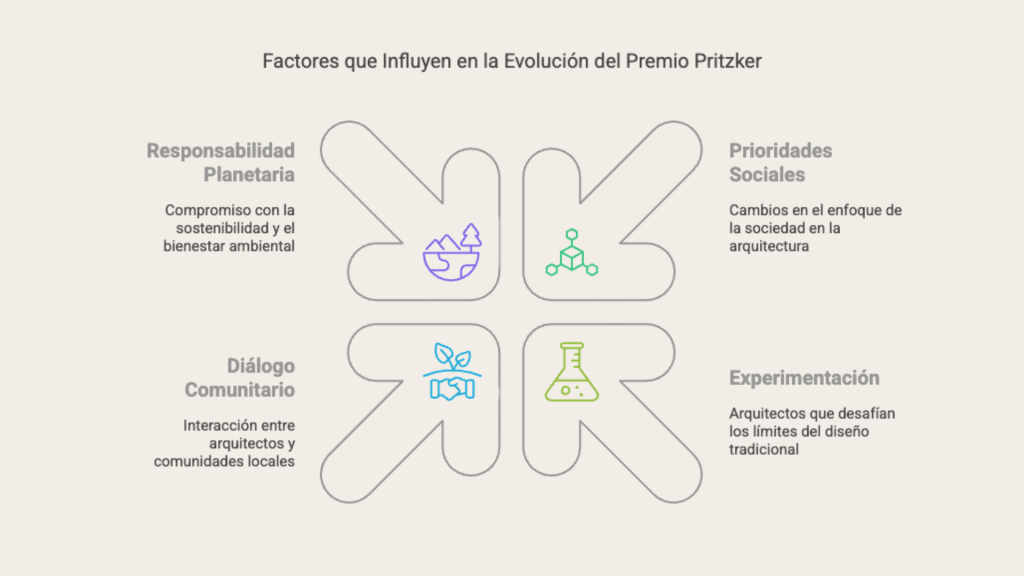
The evolution of the Pritzker Prizes clearly shows how, at each stage, architecture has been valued not only as an aesthetic or technical exercise, but as a transformative force that engages with the way we live and experience the world around us.
Relationship with the way we live and feel
As our priorities shift—from energy efficiency to social inclusion—the Pritzker Prize reflects this by honoring those who dare to experiment, engage with communities, and find solutions that help us live better and feel part of a more humane and connected environment.
The Pritzker Prize jury's line of reasoning has followed the pulse of our evolution as a society: the pursuit of beauty gave way to the pursuit of the common good. And that common good, in turn, implies responsibility toward the planet, toward communities, and toward the identity of the places we inhabit. In a way, the history of this award mirrors our own aspirations for how we want to live, experience, and share spaces in the present and in the future.
Liu Jiakun: Career and Featured Works
Liu Jiakun was born in 1956 in Chengdu, China. He is the founder of Jiakun Architects, a studio recognized for its focus on socially responsible architecture and its reinterpretation of Chinese architectural tradition in a contemporary context. His work is distinguished by the integration of local materials and traditional techniques with an innovative and sustainable approach.
Jiakun has been a visiting professor at various international universities, and his work has been exhibited at architectural biennials around the world, including the Venice Biennale and the Milan Triennale.
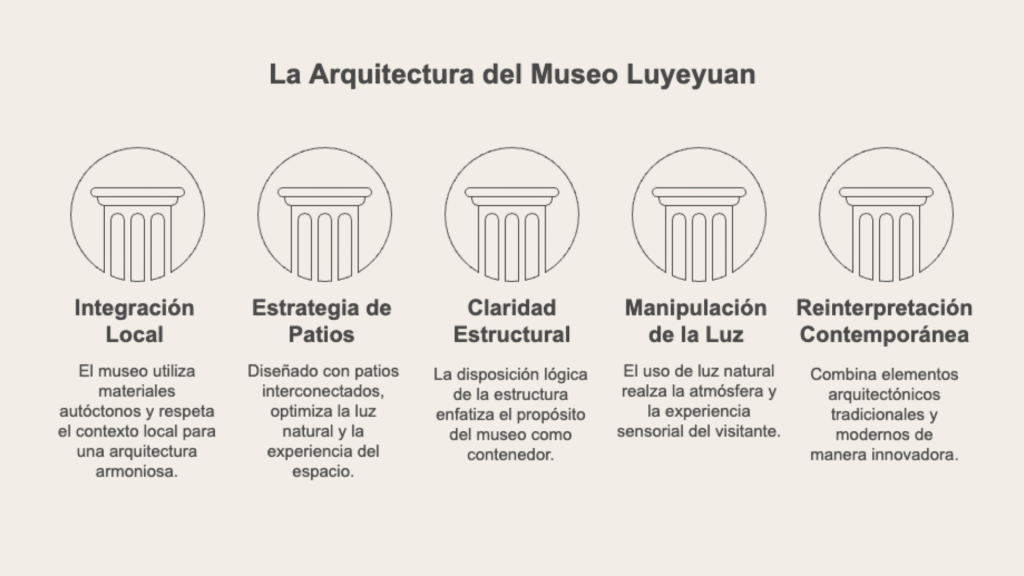
One of Liu Jiakun's most emblematic projects is the Luyeyuan Stone Sculpture Museum, located in Chengdu. This work exemplifies his architectural philosophy, where the structure not only houses art but also becomes a bridge between tradition and modernity.
Integration with the Local Context
The museum is built from pre-existing buildings, respecting the scale and essence of the site. The use of native materials, such as stone and brick, allows the building to interact with the surrounding rural landscape, avoiding the imposition of architecture foreign to the site. In this sense, Jiakun doesn't impose his personal stamp, but rather allows the place to speak through his design.
Patio Strategy and Space Transition
Following the Chinese architectural tradition of interconnected courtyards, the museum offers a fluid experience between exhibition spaces and seating areas. These courtyards not only serve an aesthetic and functional purpose but also optimize natural lighting, reducing dependence on artificial resources and fostering an introspective atmosphere for contemplating the sculptures.
Structural Clarity and Architecture as a Container
The project reinforces the idea that architecture should serve its purpose without competing with the content it houses. The museum's structure maintains a logical layout with load-bearing walls, lightweight roofs, and strategically placed openings to direct light and views. In doing so, Jiakun transforms the space into a "container" where the sculptures become the true protagonists.
Manipulation of Light and Sensory Experience
One of the museum's most striking aspects is its use of natural light, which filters through courtyards and skylights. This interplay of light creates a changing atmosphere throughout the day, adding drama and highlighting the sculptural value of the exhibits. Lighting is not just a functional element, but a tool to enhance the visitor experience.
Reinterpretation of Tradition in a Contemporary Key
While the museum maintains the spatial organization of traditional Chinese complexes, Jiakun introduces a contemporary architectural language in the composition of volumes and connections. This approach demonstrates that modernity is not at odds with tradition, but can reinterpret it in respectful and innovative ways.
Other important works by Liu Jiakun
Luyeyuan Stone Sculpture Museum (2002)Located in Chengdu, it is an example of its minimalist approach and integration with nature.
Department of Sculpture, Sichuan Institute of Fine Arts (2004): A project that stands out for its harmony between form and function in an academic environment.
Shuijingfang Museum (2013): It stands out for its innovative use of materials and its reinterpretation of historical heritage.
West Village (2015): A multifunctional urban development combining commercial, residential and cultural spaces in Chengdu.
Renovation of the Tianbao Cave District in Erlang (2021): An urban revitalization project that preserves local heritage while introducing contemporary solutions.
The Three Temples of Songyang Cultural Communication Center is a landmark work by architect Liu Jiakun, located in the center of Songyang County, Lishui City, China. This project focuses on the renovation and revitalization of a historic area home to Confucian and Taoist temples, seeking to restore its relevance as a spiritual and cultural center for the local community. Main features of the project:
- Restoration of the original urban fabric: The design is based on the concept of "Tofu Soup with Loach," which involves restoring the traditional urban structure by removing discordant elements and restoring the original spatial layout.
- Interconnected courtyard design: The cultural center is organized around a series of courtyards that facilitate the transition between indoor and outdoor spaces, fostering social interaction and connection with nature.
- Use of local materials: Native materials such as wood and steel are used in construction, reinforcing regional identity and ensuring harmony with the surrounding environment.
- Integration of cultural functions: The center houses spaces for exhibitions, theatrical performances, and community activities, revitalizing the area and restoring its central role in the community's cultural life.

Liu Jiakun's recognition with the 2025 Pritzker Prize represents much more than an individual award; it is a reflection of an architectural philosophy that prioritizes human well-being, sustainability, and cultural identity in every projectTheir focus on urban regeneration, community-friendly functionality, and respect for the history of spaces are values that resonate deeply with our understanding of architecture.
Jiakun has shown that architecture It's not just about building, but about improving people's lives, creating spaces that foster connection, tranquility, and harmony with the environment. His work is a reminder that true innovation doesn't always lie in monumentality, but in the ability to transform the everyday into something meaningful and lasting.
Like the award-winning architect, at Dcala we view architecture as a driver of positive change, based on local needs and respect for the historical context, prioritizing sustainability and improving the quality of life of communities.
This award reinforces the importance of architecture committed to society and the environment, aligned with our vision of creating spaces that are not only aesthetically striking but also generate value for those who inhabit them. In a world where cities are growing and urban problems are becoming increasingly complex, the work of architects like Liu Jiakun is a beacon of inspiration to continue designing with purpose, empathy, and a vision for the future.
Bibliographic References
- Goldberger, P. (1988). The Architecture of the Pritzker Prize. New York: Pritzker Foundation.
- Foster, N. (2007). Architecture and SustainabilityLondon: Thames & Hudson.
- Aravena, A. (2016). Keynote address. Pritzker Prize Ceremony, New York.
- Huxtable, AL (1989). On Architecture: Collected Reflections on a Century of Change. New York: Walker & Company.
- Wright, F. L. (1957). Interview at the BBC, London.
- Jiakun, L. (2025). Acceptance speech. 2025 Pritzker Prize Ceremony.