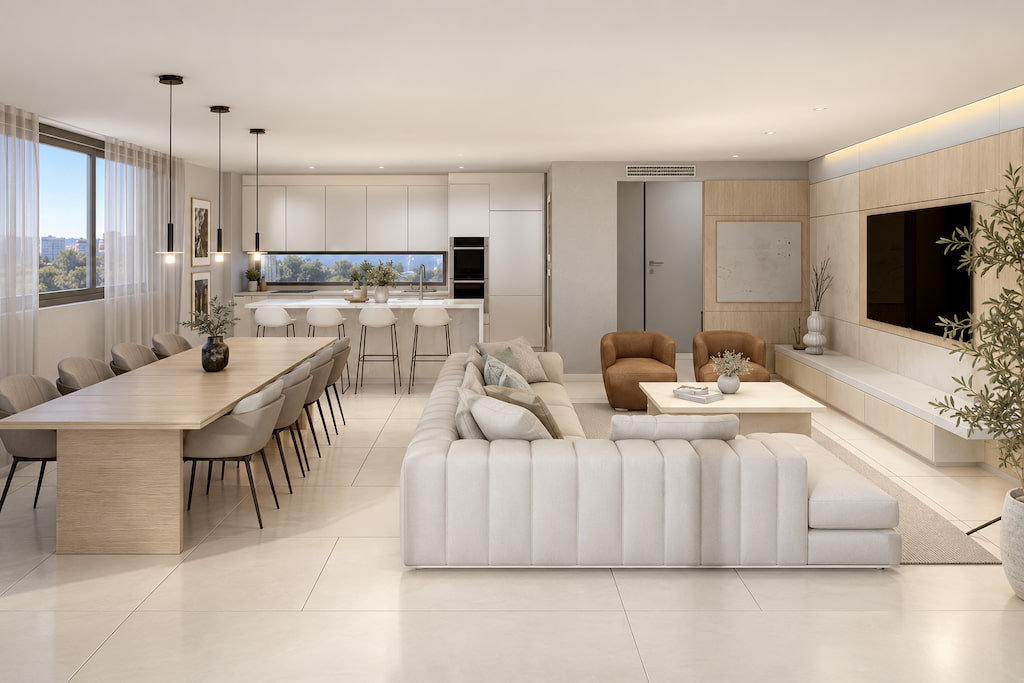
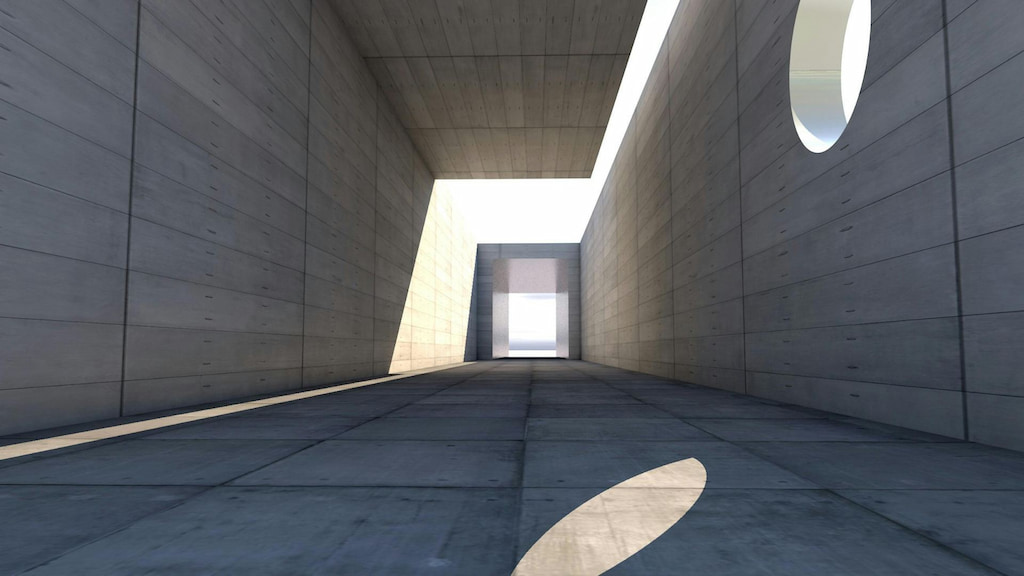
Why do some spaces move us while others leave us indifferent? Beyond personal taste or fashion, architectural beauty is a complex construct that involves neurological processes, design principles, cultural references, and sensory conditions. This perception is not only emotional but is deeply rooted in our biology and evolutionary psychology. Spaces that we find beautiful activate neural systems associated with pleasure, security, and environmental awareness.
This article starts from a clear premise: Architecture needs the science of human well-being. Its practice demands precision, empirical knowledge, and multidisciplinary sensitivity. Through rigorous methods, spatial analysis, perceptual theory, and technical knowledge, architects design environments that not only fulfill practical functions but also generate cognitive, emotional, and sensorial experiences. As an applied science, Architecture must be able to shape behavior, induce mental and emotional states, and actively contribute to our physical and psychological health. Beauty, in this context, is not decoration: it is a vector of measurable well-being. It is true that not all architecture achieves this, just as there are tomatoes that don't taste like tomatoes...
Architecture made from the science of well-being
Far from being just an artistic discipline, Architecture combines multiple knowledge: anthropology, psychology, biology, physics, neuroscienceEvery design decision—sun orientation, materials, volume proportions, soil texture—responds to a logic grounded in data, measurements, and knowledge of human behavior. From the concept phase to the final design, each choice is subject to context analysis, empirical validation, simulations, energy modeling, and emotional impact studies.
Architecture, when well conceived, is a science applied to life. It is a practice based on observation, deduction, and experience, nourished by the accumulated knowledge and evidence generated by multiple disciplines. The architect not only imagines: he interprets, measures, projects and translates complex needs into spatial solutions..
From ancient times, with Vitruvius and his "firmitas, utilitas, venustas" (solidity, functionality, and beauty), to current advances in neuroarchitecture, the goal has been the same: create places where people feel goodDesigning a space involves analyzing how light flows, how sound vibrates, how a body moves, how an emotion is generated. Each building, when it responds precisely and sensitively to these variables, becomes a measurable device for well-being.

How do we perceive architectural beauty?
Perceiving beauty in architecture is not an act of superficial judgment, but a complex neuropsychological experience involving multisensory activation, spatial memory, evolutionary recognition patterns, and automated physiological reactions.When we evaluate an environment as aesthetically appealing, we do so not only with our eyes, but also with our bodies, our skin, our hearing, and our memory.
Functional magnetic resonance imaging (fMRI) studies have shown that environments that people consider beautiful activate the medial orbitofrontal cortex, a brain area associated with pleasure, reward, and emotional decision-making. In addition, architecture stimulates the limbic system, responsible for processing primary emotions such as calm, fear, or fascination.
This response can also be explained by our phylogenetic development: throughout evolution, certain formal patterns—such as symmetry, organic forms, or shelter and prospecting conditions—have been interpreted as safe and favorable environments for survival. Thus, what we call "beautiful" today may be a biologically rooted response to environmental well-being.
Therefore, when we talk about beauty in architecture, we are talking about a tangible and measurable cerebral experience. This scientific approach allows architects to design with knowledge of the subject: understanding how geometry, scale, texture, and light impact our physiology is a powerful tool for creating truly human environments.
Beauty has historically been understood as harmony, proportion and balance.. Today we know that it also involves neurocognitive processes. Studies in neuroaesthetics—such as those by Chatterjee and Vartanian (2014)—have shown that when we find an environment beautiful, brain regions associated with pleasure, attention, and emotion are activated.
One of the key elements is the contour shape. The so-called contour effect It shows that curved lines are preferred over angular ones, not only for aesthetic reasons, but because they cause less activation in the amygdala., that is, they generate less of a sense of threat and greater emotional comfort. Unless what we are looking for is to generate a state of alarm through pronounced angles, as happens in the fire station that Zaha Hadid designed for Vitra House in Basel.
From analysis to design: how beauty is built
The creation of beauty in architecture is not the result of fortuitous inspiration or an arbitrary aesthetic decision. It is a logical consequence of multiple variables that are analyzed, modeled and verified using high-precision tools. From natural light simulations, flow analysis, acoustic studies, accessibility parameters, and material testing, each design phase is informed by scientific methods that seek to optimize the spatial experience based on empirical evidence.
Architecture has the ability to guide our emotions, influence our behavior and shape our everyday experience.Achieving this requires meticulous work involving human behavioral analysis, perceptual principles, materials studies, acoustics, ergonomics, and cultural sensitivity. Every element—from the height of a ceiling to the smell of a material—contributes to the total experience of the space, directly affecting the user's aesthetic perception and well-being.
A paradigmatic example of this rigorous application is biophilic design, which incorporates elements of nature into built environments.Its effectiveness isn't just a creative intuition, but a reality verified by science: it has been proven that this strategy reduces stress, improves concentration, enhances creativity, and creates environments with greater aesthetic value.

Beauty is felt: from space to emotion
While beauty is constructed with technical tools and scientific foundations, its true impact occurs in the emotional and sensorial realm. The architectural experience is a total phenomenon: a space is remembered not only for its form or function, but for what it made us feel. And that emotion is also the subject of study.
Neuroscience has shown that environments that appeal to emotion produce lasting effects on the nervous system. The activation of brain areas related to memory, attachment, and comfort demonstrates that design can generate deep emotional bonds between people and spaces.
Designing beauty, therefore, is not decorating, it is provoking an emotional stateJuhani Pallasmaa puts it clearly: moving spaces are perceived not only with the eyes, but also with the body and memory. Christian Norberg-Schulz, for his part, insisted that architecture must reveal the "genius loci," the spirit of the place, which connects human beings to their surroundings in symbolic and existential ways.
References such as Peter Zumthor, Tadao Ando and Luis Barragán They demonstrate that beauty is built from detail, atmosphere, and intention. Their works don't seek to impress, but to excite: a silent wall, a dim light, a plane of water, a precise shadow. Beauty is born from rigor and sensitivity, but also from the ability to resonate with those who inhabit the space.
Zumthor speaks of the "material presence" of architecture, that moment in which space is felt rather than described. Ando appeals to silence as a form of spatial meditation. Barragán, on the other hand, transforms color into an act of inhabitable poetry. They all share a common certainty: Architecture is a form of profound and timeless communication between space and person.
The impact of design on health and well-being
Numerous neuroarchitectural studies show that environments perceived as beautiful improve mood, reduce levels of cortisol (the stress hormone), enhance creativity, and increase productivity. These effects are not anecdotal, but quantifiable through physiological, psychological, and performance parameters.
In offices, This translates into greater talent retention, fewer sick days, and greater job satisfaction.. In homes, manifests itself in a greater perception of emotional refuge and daily well-being. In hospitals and health centers, in a faster recovery, less need for medication and a more positive perception of the therapeutic process.
Designing beauty is designing health. It is a sophisticated and effective way of caring for people from the space they inhabit, integrating aesthetics, science, and social responsibility into a truly transformative architecture.
As Le Corbusier said, "Architecture is the wise, correct, and magnificent play of volumes under light." Designing beauty is designing well-being. It is doing science with soul.
Bibliographic References
- Bar, M., & Neta, M. (2006). Humans prefer curved visual objects. Psychological Science, 17(8), 645–648.
- Chatterjee, A., & Vartanian, O. (2014). Neuroaesthetics. Trends in Cognitive Sciences, 18(7), 370–375.
- Gómez-Puerto, G., Munar, E., & Nadal, M. (2016). Preference for curvature: A historical and conceptual framework. Frontiers in Human Neuroscience, 9, 712.
- Strachan-Regan, K., & Baumann, O. (2024). The impact of room shape on affective states, heart rate, and creative output. Heliyon, 10, e28340.
- Tawil, N., Ascone, L., & Kühn, S. (2022). The contour effect: Differences in the aesthetic preference and stress response to photo-realistic living environments. Frontiers in Psychology, 13, 933344.
Connellan, K., et al. (2013). Stressed Spaces: Mental Health and Architecture. Health Environments Research & Design Journal, 6(4), 127–168.
At Dcala Studio we transform scientific knowledge into purposeful architectural design! If you have any questions, let's talk.