
Architectural branding: the value of identity in your projects
For years, branding was understood as something exclusively graphic: a logo, a color palette, a corporate manual. But today, companies operate in a context where experience is everything. And no experience is as crucial as the a space where a brand comes to life.
Architectural branding involves transforming a company's values into a physical environment capable of communicating, silently yet powerfully, who we are and what we stand for. Corporate spaces are no longer merely functional places: they are strategic tools that affect perception, performance and reputation, and in Dcala Studio We'll tell you.
Studies of the Journal of Environmental Psychology They show that the built environment directly influences decision-making, well-being, and perceived trust in a brand. This means that when a customer walks through the door, Space speaks louder than any sales pitch..
For profiles like Javier—pragmatic, results-oriented—this approach has a clear advantage: space ceases to be an expense and becomes an asset that positions, differentiates, and generates returns.
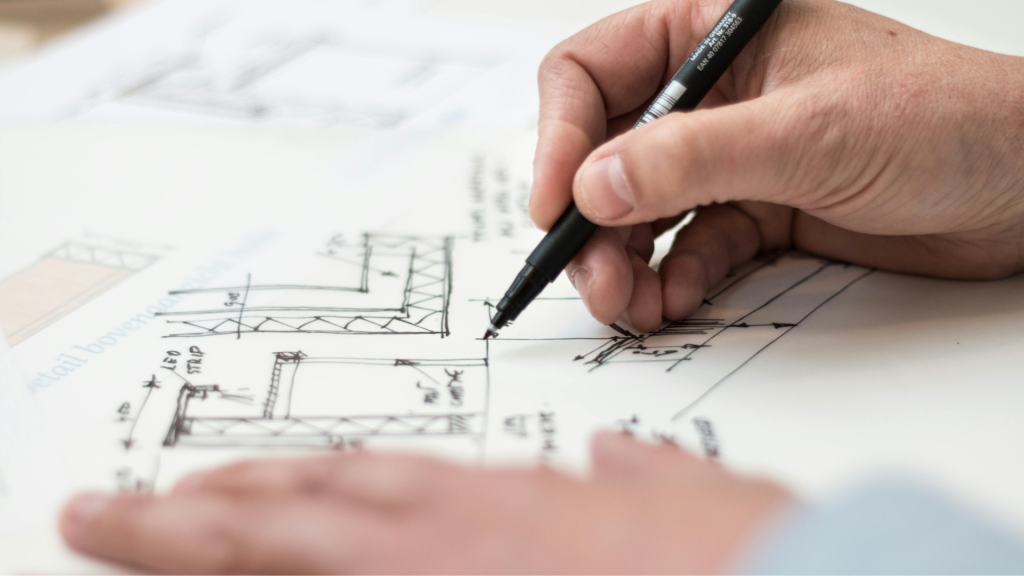
From visual identity to built space
Architectural branding goes far beyond simply placing a logo in the reception area. It's the physical and sensory translation of a brand's identity. Every material, every texture, every proportion, and every point of light answers an essential question:
How do we want our brand to feel when someone experiences it?
A solid corporate space is built from three layers of identity:
1. Material identity: Noble, honest materials that are consistent with the brand: You can't sell nature and not use clean wood in the space, or sell innovation without complicating the geometry of your space with new materials.
2. Sensory identity: Sound, lighting, temperature, and color. Neuroarchitecture has shown that these variables affect motivation, creativity, and how long people stay in a space. Your space should be highly recognizable, even down to its smell.
3. Narrative identity: The company's history integrated into the architecture: routes that guide, spaces that frame the key activity, interaction zones that reinforce corporate values such as collaboration or focus.
Architecture thus becomes a story. A story that isn't explained: it's lived.
The impact of architectural branding on user experience
A well-designed space has measurable effects. It's not just about aesthetics; it's psychology applied to the corporate environment. When a company invests in a space that reflects its identity, it's creating an experience that directly influences how the people who work there behave, perform, and feel. In this sense, architecture acts as a silent language that shapes decisions, emotions, and relationships.
More productivity and better decisions. He World Green Building Council It states that a design aligned with well-being, natural light, and spatial coherence can increase productivity by up to 20%. The presence of natural light, materials that are pleasant to the touch, or a clear distribution of space helps to reduce mental fatigue, improves concentration, and facilitates quick and effective decision-making.
Furthermore, neuroscience has shown that organized environments with good acoustics and balanced visual stimuli reduce cognitive stress. This creates a scenario where teams work with greater clarity, agility, and motivation.
Attracting and retaining talent. In a competitive market, a corporate space with a strong identity conveys professionalism, care, and purpose. An employee who feels connected to their environment develops greater commitment and stability. Spaces that reflect the company's values foster a sense of belonging and improve the internal climate.
Well-designed offices foster creativity, promote collaboration, and encourage more natural work dynamics. It's no coincidence that companies with a strong corporate culture reserve spaces for meetings, relaxation, or concentration: they understand that architecture can become a competitive advantage in the war for talent.
Today, workers value not only the agreed-upon salary but also all the benefits that come with an employment contract. You can't offer your employees fresh fruit but fail to provide them with good lighting.
Trust and perceived value. For the client, the space is the first sign of consistency. A well-maintained environment conveys seriousness, professionalism, and strategic clarity. If the physical experience reinforces the brand message, trust is multiplied.
Consumer behavior studies show that well-planned spaces foster a greater willingness to collaborate, invest, or close deals. The coherence between message and architecture transforms each visit into a tangible demonstration of competence.
Stronger organizational culture. Spaces communicate invisible norms: how work is done, what is valued, how teams interact. An open space can foster transparency and dialogue; a segmented one can promote concentration and focus. Well-designed architecture strengthens internal culture much more than any corporate manual.
When the brand is integrated into the architecture, the intentions cease to be an abstract concept and become an everyday experience: it is seen, felt and lived in every corner of the project.
Strategy and profitability of architectural branding
Architectural branding delivers returns on four levels, each of which has a direct impact on a company's efficiency, reputation, and economic sustainability. For professionals like Javier—who need clear decisions, solid arguments, and measurable results—this aspect is key.
Operational savings
A strategically designed space reduces costs from day one.
– Better natural lighting → lower energy consumption. The studies of World Green Building Council and from Lawrence Berkeley National Laboratory They confirm that optimizing the entry of natural light can reduce spending on artificial lighting by between 20% and 60%.
– Efficient distribution → less wasted space. Good spatial planning avoids unnecessary corridors, unproductive areas, or duplication of areas, allowing every square meter to contribute real value.
– Durable materials → less maintenance. Selecting high-quality, durable materials not only improves the image, but also reduces subsequent interventions, interruptions, and unforeseen expenses.
For companies that work with strict annual budgets, this sustained saving represents a clear competitive advantage.
Increase in perceived value
The physical environment is the first impression a customer, collaborator, or investor receives.
A space with a clear identity positions the company as solid, serious and coherent, which directly impacts the perception of value.
The studies of Environmental Behavior They point out that the quality of the built space influences initial trust in a brand by up to 30%. In other words, a well-designed space facilitates higher-quality relationships and more favorable decisions.
Furthermore, when architecture reflects corporate values, the company communicates, without explicitly stating it, that it knows who it is and what it offers. This clarity of identity translates into reputation.
Competitive advantage
Most companies try to differentiate themselves through marketing or advertising. But few use architecture as a strategic tool.
A cohesive workspace communicates innovation, consistency, and business maturity. It's an immediate differentiator in meetings, sales visits, and recruitment processes.
Architectural branding transforms a space into a silent argument, But it's incredibly effective: people perceive professionalism even before they start talking.
When a company takes care of its physical environment, the implicit message is powerful: “We are reliable. We are rigorous. We are prepared.”
4. Long-term projection
A good architectural project is not just beautiful: it is adaptable, functional, and able to grow with the company.
– Flexible spaces that allow for organizational changes without costly renovations.
– Materials that age well and maintain their aesthetic appeal over the years.
– Layouts designed to accommodate new technologies or future expansions.
Coherent architecture avoids rapid obsolescence and becomes an asset that It preserves and increases its value. Unlike marketing campaigns or one-off actions, a well-designed space remains relevant for decades.
Investing in architectural branding is not an expense; it is build a strategic asset, measurable and sustainable, that works day after day to reinforce the identity, reputation and profitability of the company.
Architectural branding is the union of strategy, design, and business. For a company, it means showcasing its identity. without need of words. For users, it means inhabiting a space that supports, motivates, and connects. And for clients like Javier, it means combining efficiency, identity, and profitability.
In Dcala Studio We design spaces that tell stories, which strengthen the brand and create consistent, sustainable and memorable work environments.
Because identity is not just designed. It is also being built.