
How to determine the orientation of a house?
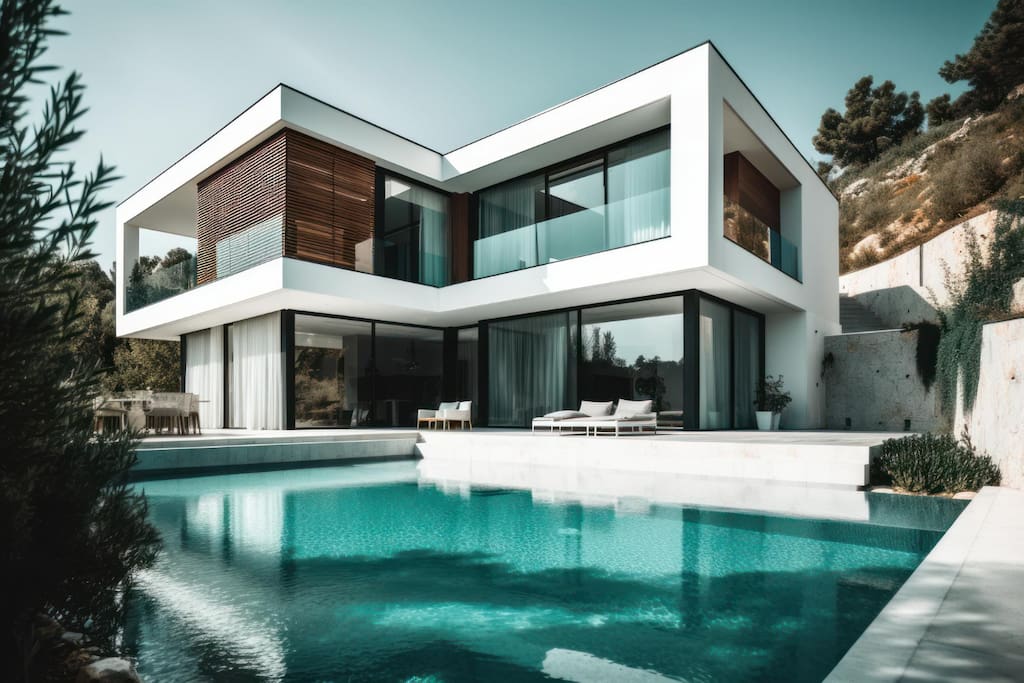
To find out the orientation of a house, You can use your mobile phone's compass, locate the property on Google Maps, or check its position on the land registry map. The important thing is to identify which cardinal direction—north, south, east, or west—the facade faces, and especially the main windows, balconies, or terraces of the property.
Knowing this information might seem secondary, but it determines the hours of sunlight, the amount of natural light, room temperatures, and some heating and cooling needs. The orientation of walls and windows directly influences the building's heat gain and loss.
Therefore, if you are thinking of buying, renting or renovating a home, checking its orientation before making a decision can help you anticipate what it will really be like to live in it.
What does the orientation of a house mean?
The orientation of a house indicates towards which cardinal point do their facades and exterior openings face?. Although it's common to hear that a house has a "south-facing" or "east-facing" orientation, in practice a single house can have several orientations. For example, the living room might face south, the bedrooms east, and the kitchen north.
Therefore, to properly value a house, it's not advisable to focus solely on the front door or a supposed "main facade." It's much more useful to check which way the windows and terraces face in the rooms where you'll spend most of your time.
Orientation influences the lighting, thermal comfort and energy consumption of the home.
How to determine the orientation of a house step by step?
There are several methods, and you don't need any architectural knowledge. If you want a quick answer, Google Maps or your phone's compass are usually sufficient; if you want to verify it, you can also consult the Land Registry.
- Use the mobile phone's compass. Open the compass app and stand next to the window, balcony, or building facade you want to analyze. Look directly outwards. If the compass indicates approximately 0°, you are facing north; 90° corresponds to east; 180° to south; and 270° to west.
- Check the house with Google Maps. Find the address, activate satellite view, and locate the building. Make sure the map is oriented with north in the correct position. Once identified, you can check which way each facade faces.
- Consult the Cadastre. Search for the property on the Cadastre's Electronic Office using its address or cadastral reference and access the map representation. The viewer allows you to orient yourself using north as a reference and analyze the building's position more precisely.
- Review the house plans. If you have the project plans or an architectural drawing, look for the arrow pointing north or the compass rose. From there, you can determine the orientation of each facade, window, and room.
- Observe the path of the sun. You can also use the sun as a rough reference. In Spain, and generally in the Northern Hemisphere, the sun's path is across the southern part of the sky. The sun rises in the east and sets in the west, although these points vary slightly depending on the time of year.
How to find your direction using Google Maps?
Google Maps is probably the most convenient method if you want to analyze a house before visiting it.
Enter your address, zoom in until you can clearly see the building, and switch to satellite view. Then check that the map isn't rotated and use the compass to correctly identify north.
From there, don't just look at which way the building faces. Identify the living room, the terrace, the bedrooms, or the main windows if you know the interior layout.
For example, if the living room is located on the lower facade of the building and the map is oriented with north at the top, that facade faces approximately south. If the windows are on the right side, its orientation will be approximately east.
In buildings with irregular shapes, intermediate orientations such as southeast or southwest may appear. This difference is important, as it determines when the building receives the most sunlight.
What does it mean for a house to be oriented north, south, east, or west?
There is no single perfect orientation for all homes. Each home determines when its rooms receive the most light and solar radiation, and this may be more or less advantageous depending on the climate.
| Orientation | General behavior | This may be of interest to |
|---|---|---|
| North | It receives little direct sunlight and usually offers more uniform light. | Warm climates or spaces where excessive heat is to be avoided |
| South | It receives greater sun exposure, which is especially beneficial in winter. | Cold climates or homes with good sun protection |
| This | It receives mostly morning sun | Bedrooms, kitchens and spaces where morning light is desired |
| West | It mainly receives afternoon sun | Homes where brightness is sought during the last hours of the day |
| Southeast | It combines morning sun and part of midday sun. | A balanced option in many climates |
| Southwest | It receives more radiation from midday until the afternoon | Cold areas, although sun protection may be required in summer |
These characteristics are for guidance only. Actual performance also depends on the city, the height of the building, nearby structures, trees, awnings, insulation, window size, and the presence of balconies or overhangs.
Therefore, orientation should be analyzed together with the characteristics of the dwelling to understand how it can influence its lighting, temperature and energy efficiency.
What is the best orientation for a house?
A south-facing orientation is often particularly advantageous in areas with cold winters because it allows for better use of the sun during the cooler months. However, a facade with large windows and no shading can generate excessive heat at certain times of the year.
In areas with very hot summers, it may be preferable to avoid intense afternoon sun exposure. Therefore, an east-facing orientation can be attractive, as it allows you to enjoy the morning sun while keeping the house more protected during the hottest hours.
West-facing windows require special attention in warm climates because they receive afternoon sun, when outdoor temperatures are typically higher. Elements such as blinds, awnings, louvers, vegetation, or good insulation can help reduce overheating.
In short, The best orientation for a house depends on the climate, the design of the house, and the needs of its inhabitants.. It is not advisable to only consider the cardinal direction, but also aspects such as insulation, shadows, ventilation and the size of the windows.
Why is it important to know the orientation of a house before buying it?
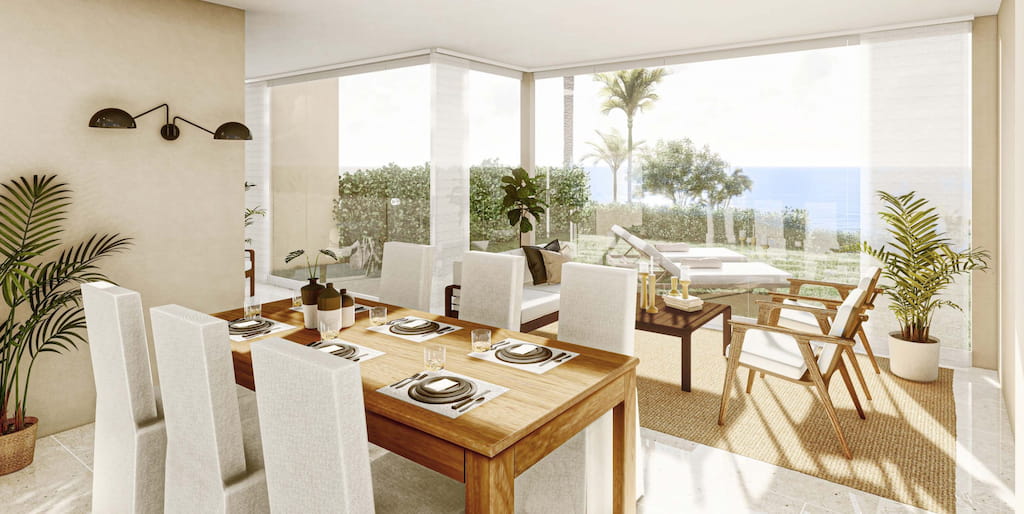
Knowing the orientation of a property before buying it allows you to anticipate how much natural light it will receive, what its interior temperature will be like, and what its energy consumption might be..
It also influences the time of day the sun shines in. For example, an east-facing house receives more light in the morning, while a west-facing one concentrates the sun during the afternoon.
Furthermore, it can affect the comfort of the rooms and the use of heating or air conditioning. Therefore, it's advisable to consider the orientation along with other factors such as insulation, floor level, windows, and shadows cast by nearby buildings.
The orientation of a house is not everything
Good orientation alone does not guarantee that a home will be bright or comfortable. A nearby building, for example, can block much of the sunlight.
Height also plays a role. A lower floor may receive less sunlight than one located on higher floors of the same building.
Ventilation, window size and protection, insulation, vegetation, balconies, and surrounding shade must also be considered. All these elements influence how the house actually performs.
Conclusion
Knowing the orientation of a house before buying or renovating it can help you make better decisions about layout, natural light, thermal comfort, and energy consumption.
Furthermore, good orientation should be analyzed in conjunction with aspects such as insulation, windows, ventilation, and the characteristics of the surrounding environment. If you need professional advice, Dcala Studio, architecture studio in Malaga, can help you design or transform your home, taking into account both functionality and aesthetics. Their experience in Interior design in Malaga It allows each space to be adapted to the real needs of its users, making the most of the light, the layout and the characteristics of the home.